
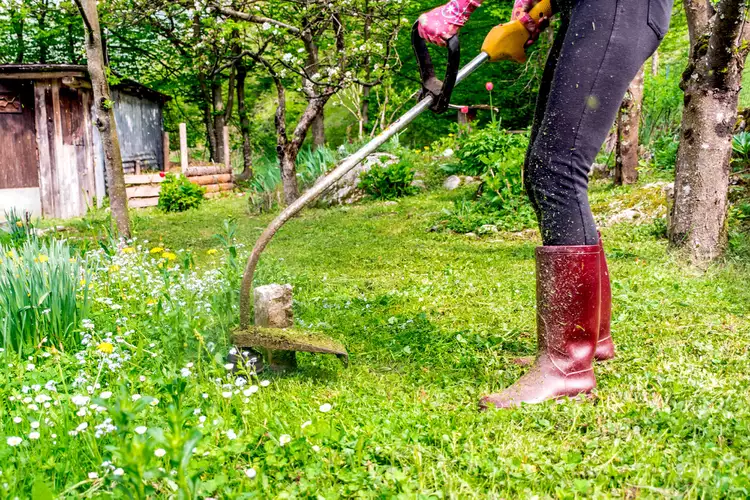
As landscaping equipment goes, a weed whacker is one of the most versatile power tools to have around. However, it's essential to know how to use a weed whacker correctly and safely so you can get the most out of this handy machine. Variously called a weedwhacker, weed eater, or weed trimmer, it can do much more than just help you keep weeds under control. First, find out what to keep in mind when choosing the best weed whacker for your landscaping needs. Then, follow these tips on how to use a weed whacker to trim, edge, and keep your yard looking tidy.
Choosing the Best Weed Whacker
When deciding on the type of weed whacker to purchase, it helps to keep a few considerations in mind. First, think about whether you want a plug-in, battery-powered, or gas-powered model.
Plug-in weed whackers are relatively quiet and powerful. And being electric, there's no exhaust to contend with or trips to the gas station for fuel. However, they do require an extension cord and care should be taken not to trip over or cut the cord while actively trimming. Before purchasing, you should check around your house or property to determine where plugs are available to avoid doubling up on cords.
A second electric option is a battery-powered weed trimmer. These machines tend to be as quiet as plug-in versions, but rather than dealing with extension cords, rechargeable battery packs provide all the needed power. Battery-powered weed whackers are perfect for smaller yards or light duty work. Overly thick grass or large areas can prove to be a bit too much for the batteries to handle.
Finally, gas-powered weed whackers are a third option. Often larger and heavier than electric alternatives, gas-powered trimmers are the preferred option for commercial maintenance crews. These machines' noise and heft are outweighed by their extended use time and power to cut through even thick grass.
How to Safely Handle a Weed Whacker
Once you've chosen the best weed whacker for your yard, make sure to read and follow all instructions in your model's user manual. Then, before turning on your weed whacker, cover as much exposed skin as possible. Dress in a long-sleeved shirt, long pants, and closed toe shoes to shield you from flying debris. Wearing gardening gloves and safety/sunglasses also can help you avoid injury.
How to Use a Weed Whacker
Weed whackers are designed to either spin in a clockwise or counter-clockwise direction. If your trimmer is designed to spin counter-clockwise, it will cut best on the right side and debris will fly outward toward the left side. These machines are best for right-handed users. Trimmers designed to spin clockwise will fling debris to the right and cut best on the left. These types tend to be better for left-handed people.
As weed trimmers spin, a thin nylon string slices through plants. Make sure you have about 6 inches of string extending from the machine. Then, aim to do most of your trimming with the tip of that string. If you try to cut down an area with the entire length of string, you can overwhelm the machine. Also, try to avoid hitting hard surfaces such as rocks, walls, or fences, which will damage or break the string faster.
Otherwise, operating a weed whacker is relatively simple. Just hold the business end steady and keep your movements as smooth as possible for the best trim. With a little practice, you'll soon get the hang of how to use your weed whacker efficiently and effectively. Then, use the following techniques to whip your whole landscape into shape.
Tapering–Creating a tapered border along your lawn gives it a cleaner look along your driveway or curb, for example. To begin, lower the trimmer at a 45 degree angle toward the edge of the grass and hold it at the height you want your grass. Then move along the edge of the area. To keep clippings out of mulch, rock, and planting areas, walk to the left with a counter-clockwise spinning trimmer and to the right with a clockwise spinning trimmer.
Trimming–If you have areas of lawn that your mower can't quite reach , you can use your weed whacker to trim the grass. This technique involves holding your weed whacker at roughly a 10 degree angle and moving from side to side. To avoid creating divots and gouges, be sure to maintain the same height throughout the area and move your body in one direction.
Edging–Use this technique to create a defined border between two different areas with a narrow gap. For example, you might want to do this between your lawn and the sidewalk or curb. To edge, hold the trimmer vertically to the ground so that the string spins at a 90 degree angle to the ground. Begin edging on one side and move along in a single direction until finished.
Scything–More powerful weed whackers are best for this technique, which involves trimming down large areas of tall grass and weeds. You might want to do this in preparation for further cutting with a lawnmower, for example. When scything, begin by holding the trimmer at about the top third of the vegetation. Then move the head back and forth. After the first layer has been trimmed, another third can then be removed in the same way.