
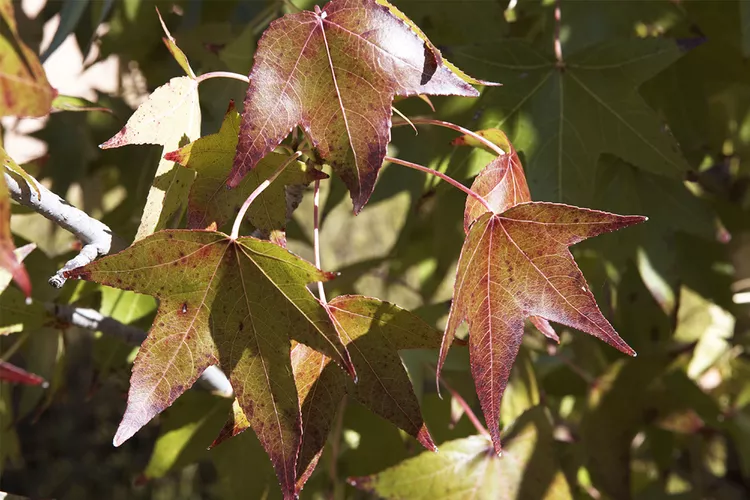
Sweet gum trees (Liquidambar styraciflua), also called sweetgum trees, are known for their distinctive, five-pointed glossy green leaves that turn yellow, gold, red, pink, and purple in fall, as well as the large number of spikey seed gumballs they produce each year. Sweet gum trees are native throughout the eastern U.S. to central Florida and east Texas. The fall color of this tree still develops without cold temperatures in warmer climate areas.
A sweet gum grows rapidly, forming a straight, tall trunk early on before becoming broader and functioning as an excellent shade tree. This attractive deciduous tree isn’t as popular as it once was due to its reputation for being messy. The spikey seed pods can be a problem in lawn and patio areas by making foot traffic difficult. However, some seedless cultivars are available.
Sweet Gum Overview
| Genus Name | Liquidambar styraciflua |
| Common Name | Sweet Gum |
| Additional Common Names | Sweetgum, Redgum, Red sweet gum, American sweet gum |
| Plant Type | Tree |
| Light | Sun |
| Height | 60 to 80 feet |
| Width | 40 to 60 feet |
| Flower Color | Yellow |
| Foliage Color | Blue/Green |
| Season Features | Colorful Fall Foliage, Winter Interest |
| Special Features | Attracts Birds, Fragrance, Low Maintenance |
| Zones | 5, 6, 7, 8, 9 |
| Propagation | Seed |
| Problem Solvers | Deer Resistant |
Where to Plant Sweet Gum
Plant sweet gum in full sun to partial shade in USDA Hardiness Zones 5 to 9. It grows best in neutral to acidic soil that is moist but well-draining. Choose an uncrowded space; these trees need a large area for root development. And place them where their gumballs won't become annoying when they fall to the ground.
How and When to Plant Sweet Gum
Plant sweet gum trees in spring. This is a shallow-rooted tree, and the roots need several months to recover from transplanting. Choose a balled and burlapped tree because of the shallow root system. The roots use that first growing season to become established.
Plant young trees in holes dug to the same depth as the root ball is high and half again as wide. Remove any protective cover, but leave the burlap in place until the tree is positioned in the hole. Then, cut away as much of the burlap as possible and backfill the hole, watering when the hole is half full. Top the soil with 2 to 3 inches of mulch.
Sweet Gum Care Tips
Light
A full-sun location is best for sweet gum trees, but they tolerate light shade.
Soil and Water
Plant sweet gum trees in consistently moist, but well-drained soil that has an acidic or neutral pH. Apply supplemental water to the new plants the first year, being sure that dry soil receives water. Water these shade trees during drought to prevent dieback.
Temperature and Humidity
Sweet gum trees prefer a temperature range from 50°F to 100°F and can experience some dieback in colder weather. The tree is hardy to Zone 5 but benefits from the protection of several inches of mulch for its shallow roots in the coldest parts of its range. The tree tolerates heat and humidity well.
Fertilizer
In spring, fertilize sweet gum trees with a layer of compost or a balanced, slow-release granular fertilizer according to package directions. Add the compost or fertilizer to the top of the soil and water it. Don’t dig it in; you might damage the shallow roots.
Pruning
Prune the tree in mid-to-late summer to remove any low-growing branches to make mowing easier. Remove damaged and dead branches when you see them.
Pests and Problems
Sweet gum is a target of spongy moths, but most other insects and diseases seldom affect the tree. Drought and cold temperatures can do some damage to the tree too. In soils that aren't acidic enough, sweet gum can become chlorotic, a condition where the tree can't take up enough nutrients so leaves start yellowing.
How to Propagate Sweet Gum Trees
Collect the gumballs in early fall before they open. Put them in a tray and wait for them to open and release their seeds, which usually takes about a week. The seeds can be stored in the refrigerator until needed. Sweet gum tree seeds need a 30-to-60-day period of cold stratification. Then, they can be planted in nursery containers in a sheltered area to produce seedlings.
Types of Sweet Gum Trees
'Burgundy'
The leaves of Liquidambar styraciflua ‘Burgundy’ turn a bright reddish purple in the fall. It is not as cold hardy as the species tree but grows well in Zones 6-9. It is particularly well adapted to the Deep South.
'Gold Star'
Liquidambar styraciflua ‘Gold Star’ produces a lovely yellow fall color. This tree is narrower than the species and grows up to 60 feet tall. It's cold-hardy to Zone 5 and provides an attractive vertical accent to the landscape.
'Rotuniloba'
Liquidambar styraciflua ‘Rotundiloba’ grows 60 to 75 feet high and 20-30 feet wide in Zones 5-9. The foliage turns yellow to burgundy in the fall. This tree does not set fruit, so it is a particularly good choice for homeowners who don't want to deal with gumballs.